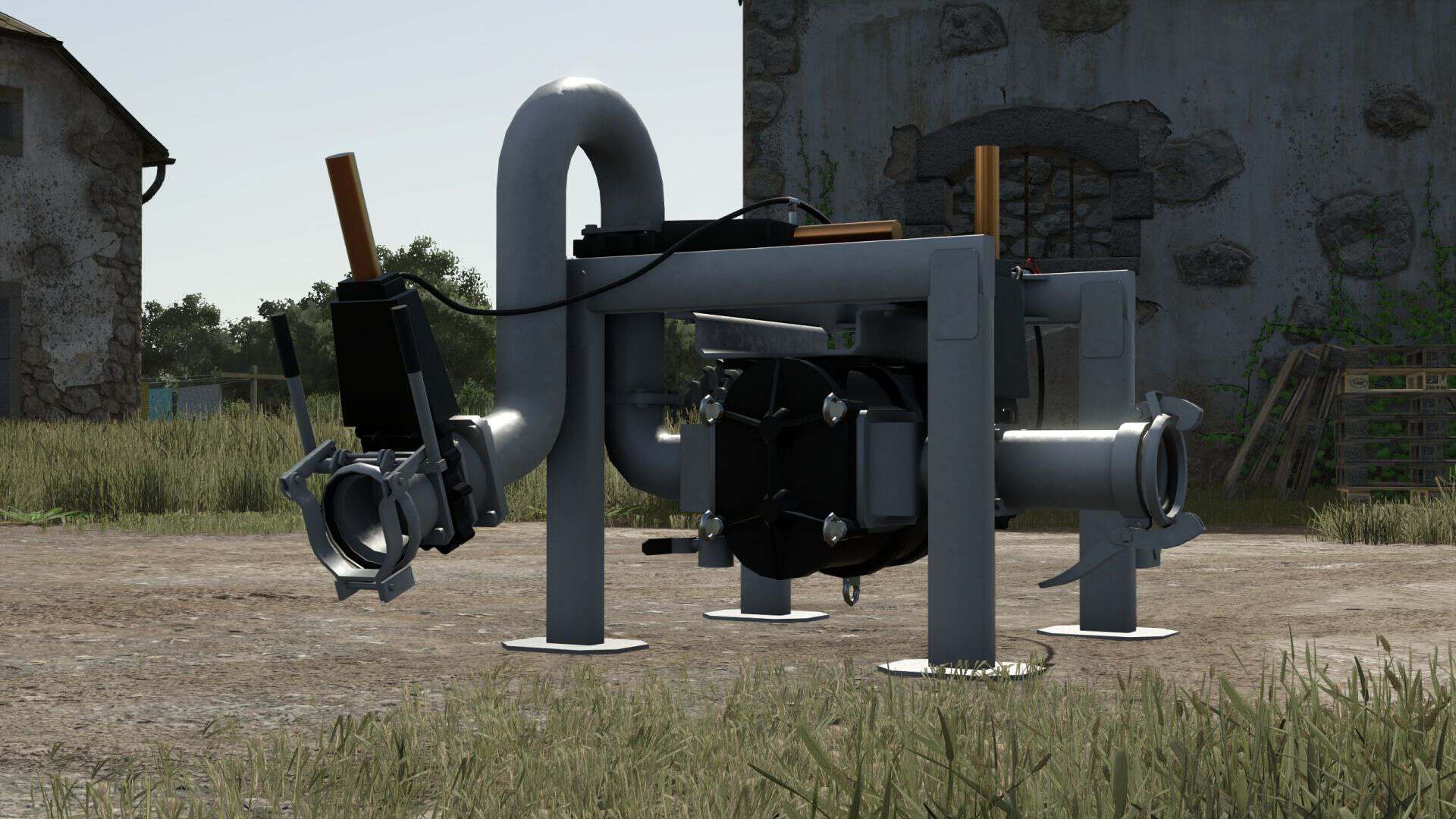
FS25 Slurry Pipe System v1.0.0.9
Realistic physical slurry pipe system for Farming Simulator 2025.
Replaces vanilla “drive into a trigger and fill” mechanics with a tactile system where you physically connect tanker fill arms or pipe chains, run a PTO-driven pump, build pressure, control flow direction, and watch slurry move through real plumbing — with a slurry that actually thickens, crusts and blocks if you neglect it.
What it does:
Plumbing & transfer
– Fill arms swung out of the tanker by joystick into open slurry pits or rubber boot ports on buildings and other vehicles.
– Pipe chains — multi-segment pipes laid by walking from one coupler toward another, locked into place when both ends overlap valid couplings.
– Direct bez pipes — a single connecting pipe between two nearby couplers, for quick pump transfers between a tanker and a building.
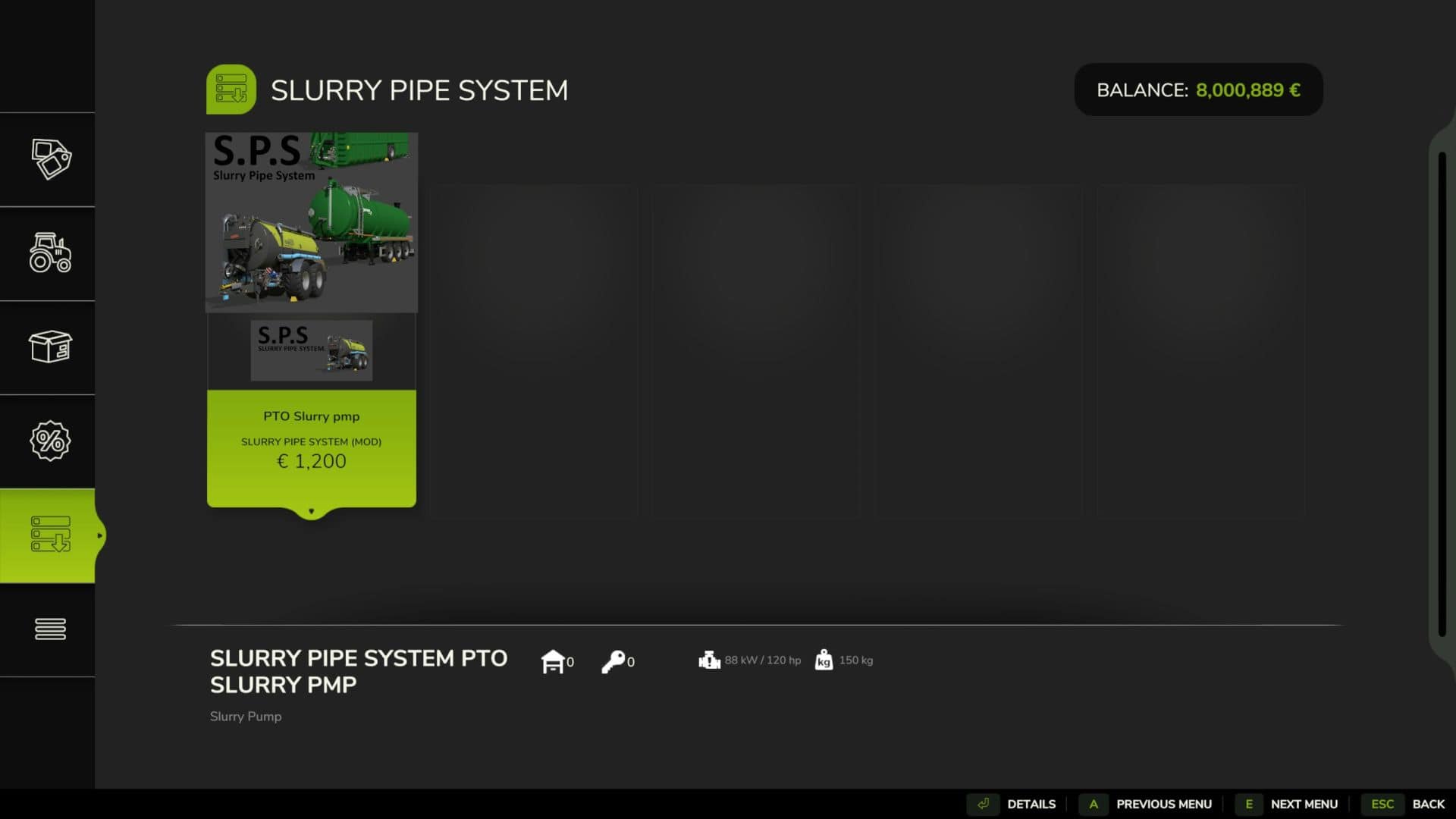
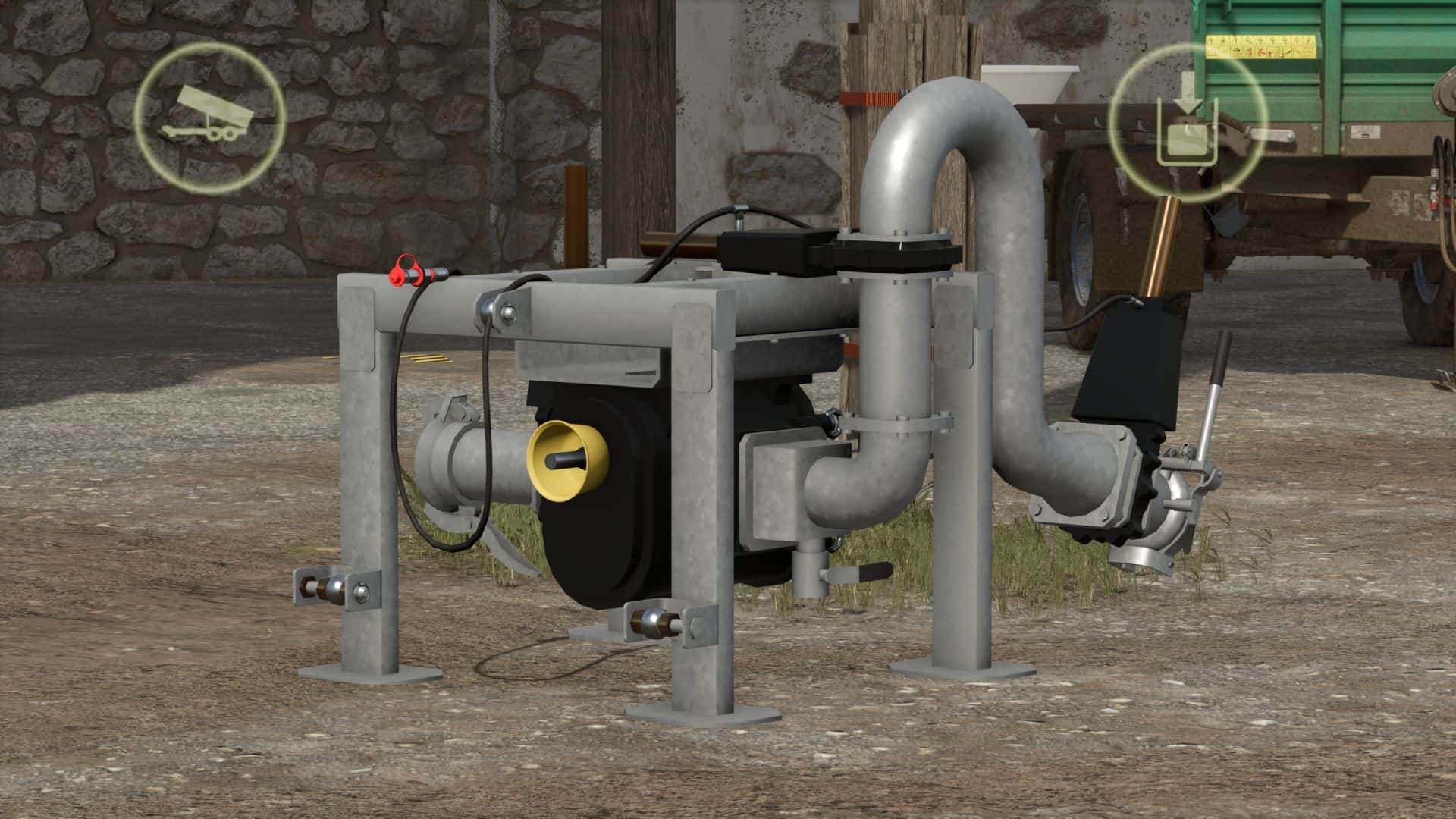
– Conduit pump (PTO Slurry Pump) — a passive pump trailer that lets two pipe chains transfer through it.
– Animated couplers and valves — clamp handles close on connect, valve wheels rotate on open.
– Coloured pipes — pick from a palette per pipe segment, stored per save.
– Multi-fill-type support — works with LIQUIDMANURE and DIGESTATE; transfers automatically pick whichever fill type is actually present.
Pumps & pressure
– Pump types — vacuum (stored ±bar pressure model with a gauge), HVP high-volume pump, conduit pump station, and openTop passive vessels (e.g. nurse tanks).
– Pressure model — vacuum tankers build, hold, taper and purge a stored charge that drives fill and discharge; spread behaviour scales with pressure rather than a simple on/off.
– PTO shear bolt (opt-in) — wears and snaps under load while turning with the PTO engaged; walk-up hold-to-repair.
Slurry that behaves like slurry
– Thickness / dry matter — slurry thickens as dry matter concentrates; thickness affects flow and spread.
– Crust & blockages — an unmixed store crusts over the season; crusted, lumpy slurry can block spreader outlets and the macerator. Mixing clears the risk; adding water dilutes thick slurry.
– Agitation — a manager-driven agitator works on any registered vehicle with an agitator tip node, no specialization required.
– Water intake — fill arms can draw water straight from map lakes and ponds wherever the map provides SPS water planes.
Spreading
– Dribble bars & band spreaders — per-outlet blockage modelling, distributor macerator, and a spreader HUD.
– Fertiliser / herbicide sprayers — load liquid fertiliser or herbicide through the same coupler-and-pipe system via a dedicated sprayer integration, operated from a single walk-up pump control. No pressure model on sprayers — flow is a flat rate.
Architecture
SlurryPipeManager.lua (12,065 lines) split into a core file plus eight domain modules (SPSM_Chains, SPSM_Couplers, SPSM_Flow, SPSM_Pressure, SPSM_Consistency, SPSM_Spreader, SPSM_Sprayers, SPSM_IBC). Pure relocation, mechanically verified byte-identical to V1.0.0.8. Scripts folder reorganised into domain folders (debug/, chains/, couplers/, shearBolt/, blockage/, hud/, events/, agitators/, util/, water/, herbFertSprayer/, manager/, overrides/, settings/). New central debug registry (scripts/debug/SPSDebugConfig.lua): one named on/off channel per file, runtime-switchable via the spsDebug console command. All channels ship OFF.
Performance (dedicated servers)
Vehicle config lookups were loading and parsing vehicle XML from disk on every call, from per-tick trigger hooks and per-frame discharge gates — the reported ~45 km/h speed caps and steering lag on busy servers. Both finders are now cached per configFileName (negatives included). One disk read per vehicle model per session.
Multiplayer fixes
Placeable-side hose disconnects are now owner-keyed (the event carries the placeable), so every machine resolves the exact coupling — fixes “friend detaches, still attached on my end until he drives off”. Selling a placeable now broadcasts authoritative disconnects for every live bond before teardown, and duplicate placeable registration (the stale “ghost pipe” generation on guests) is guarded out. New placeable detach-handler registry: chains anchored or bonded to a sold placeable (animal pens, docking stations) are now fully removed with correct coupler close animations on every machine; sprayer-pipe disconnects on sell are broadcast; pending queues referencing the sold placeable are purged. Future placeables (separator etc.) plug into the same registry. Disconnect events now log an [SPS MP RX] line on receivers.
Sprayer store system (new)
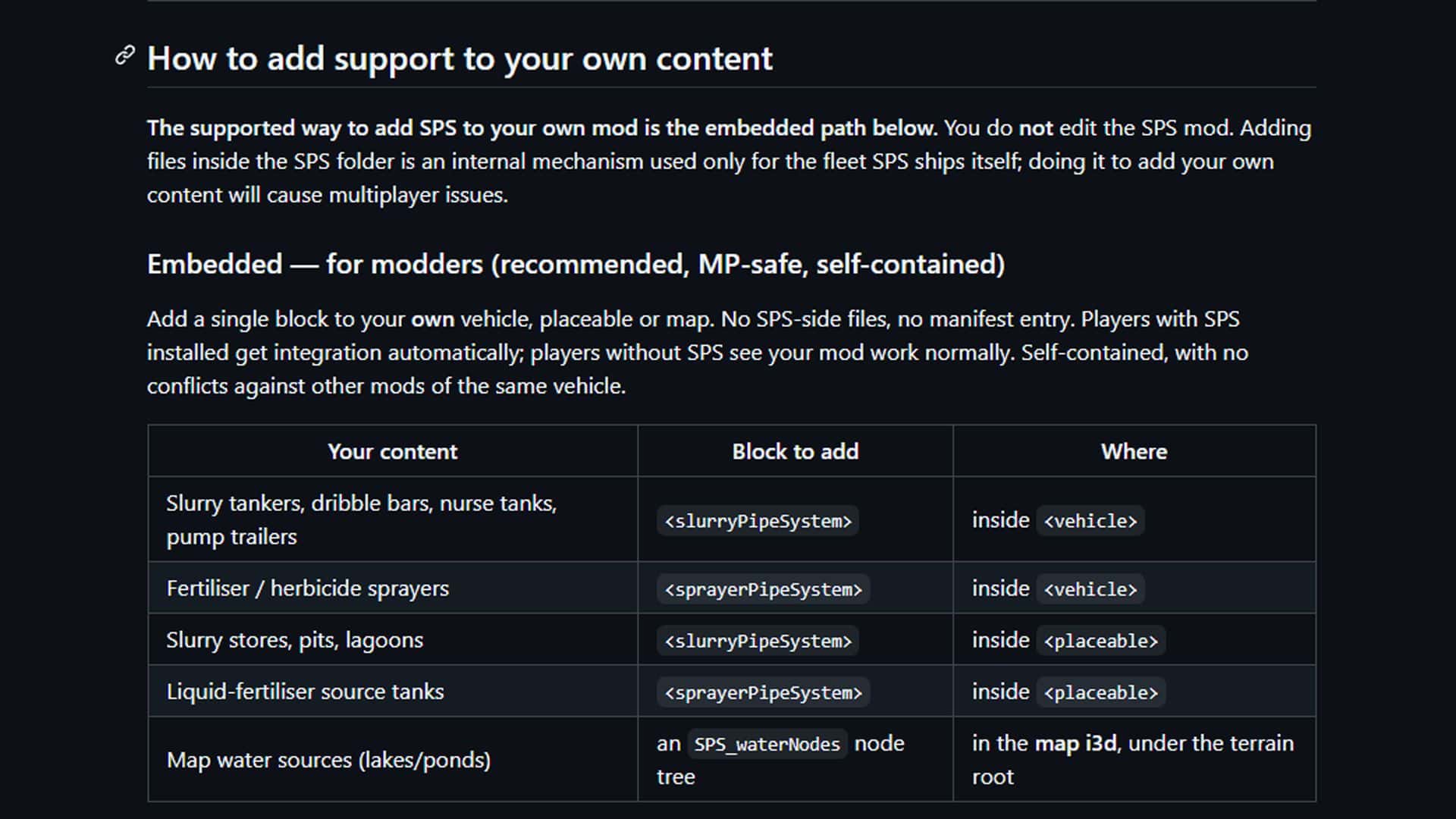
SPS xml now controls a store’s fill types: coupler-declared types are seeded into the placeable’s Storage at load — no map/base xml edits needed (storageFillTypeControl=”store” opts a modder store out). Per-coupler capacity=”X”: same-type couplers sum into that type’s storage capacity; without it the store’s own capacity applies. Dynamic tank compartments: fillTypes=”ANY” (or a category/name list) plus capacity makes a coupler one physical tank — it locks to the first liquid that flows through it and unlocks only when drained empty, then the type vanishes from the info panel. Works with basegame and script-mod liquids (SoilFertilizer etc.). Locked compartments persist in the savegame and sync to clients (event + join dump). ANY couplers pre-seed the base “sprayer” category so basegame liquids always show on the store display; aggregate levels self-heal from older saves. Connecting picks the coupler nearest the PLAYER when several are in reach — walk to the tank you want. Sprayer placeable couplings accept node=”…” (i3dMappings, matching the slurry placeable schema) as well as mountNodeName.
Robustness
Map mod folders can be renamed freely: bundled Witcombe config match paths no longer include the folder name, and both placeable register paths bail cleanly if a path-matched config finds none of its nodes (wrong placeable). Water manifest matching is case-insensitive, supports title alternatives (titles=”A;B”) and opt-in substring matching (titleContains=); player folder renames never affected it.