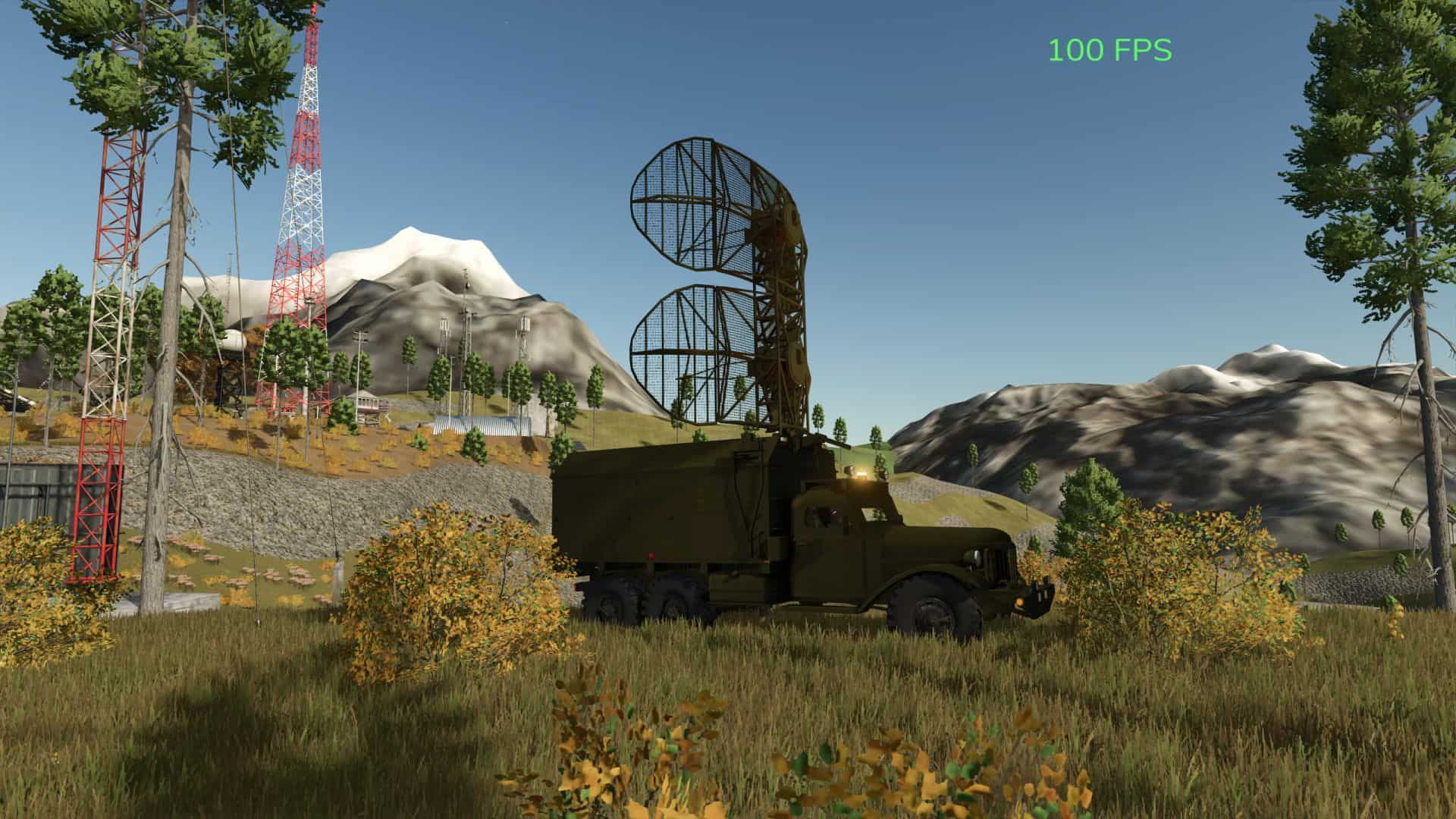
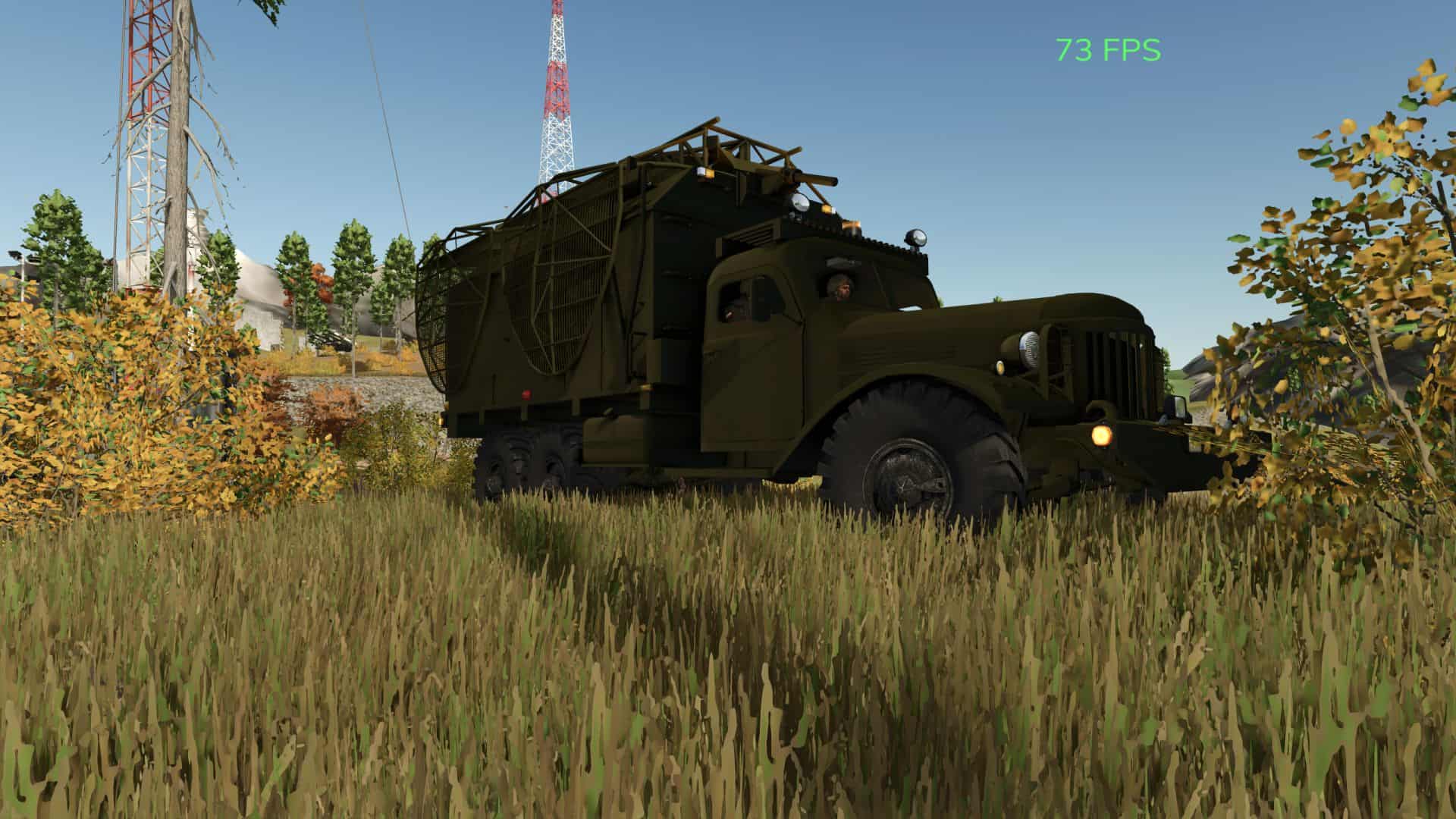
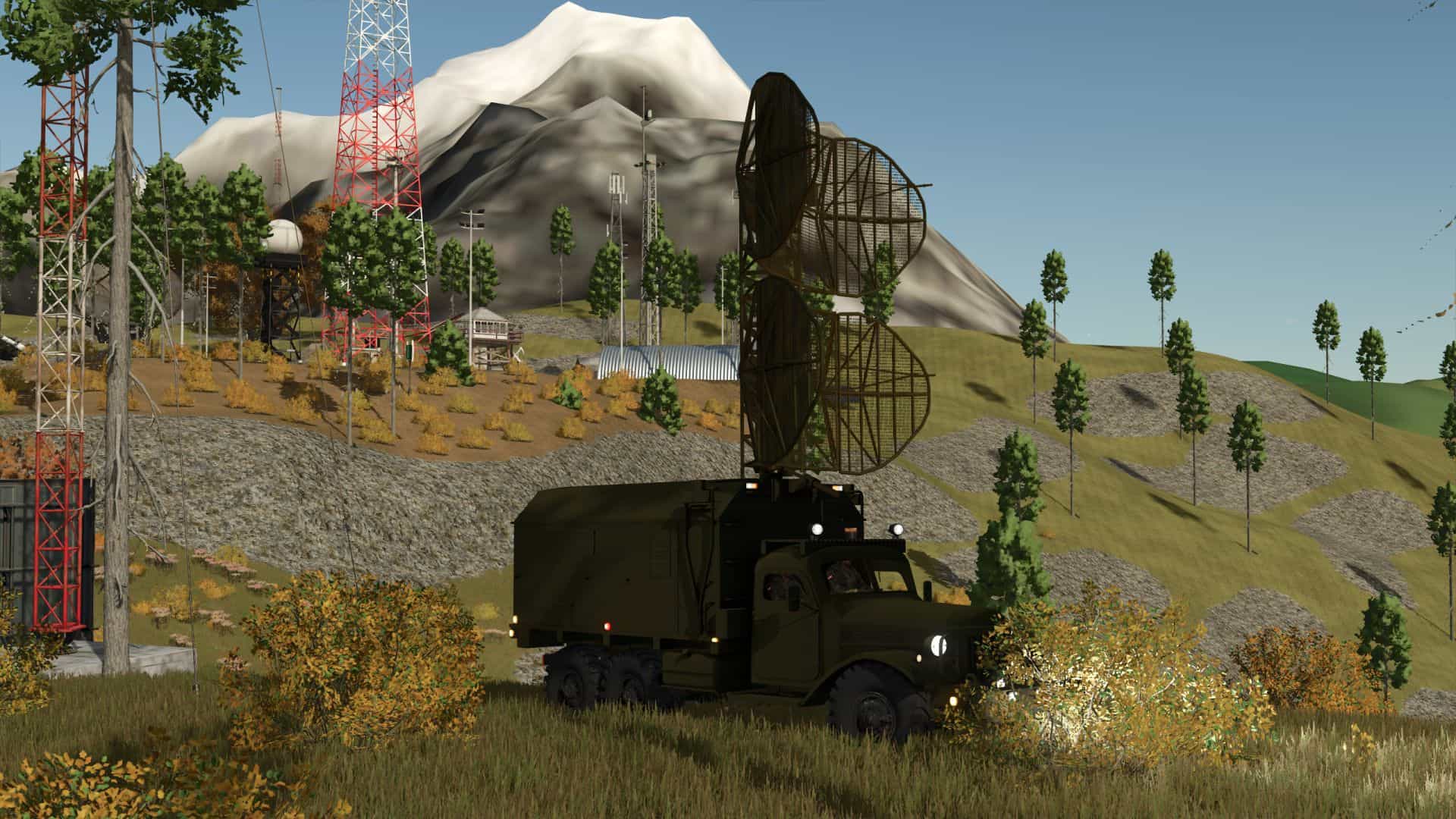
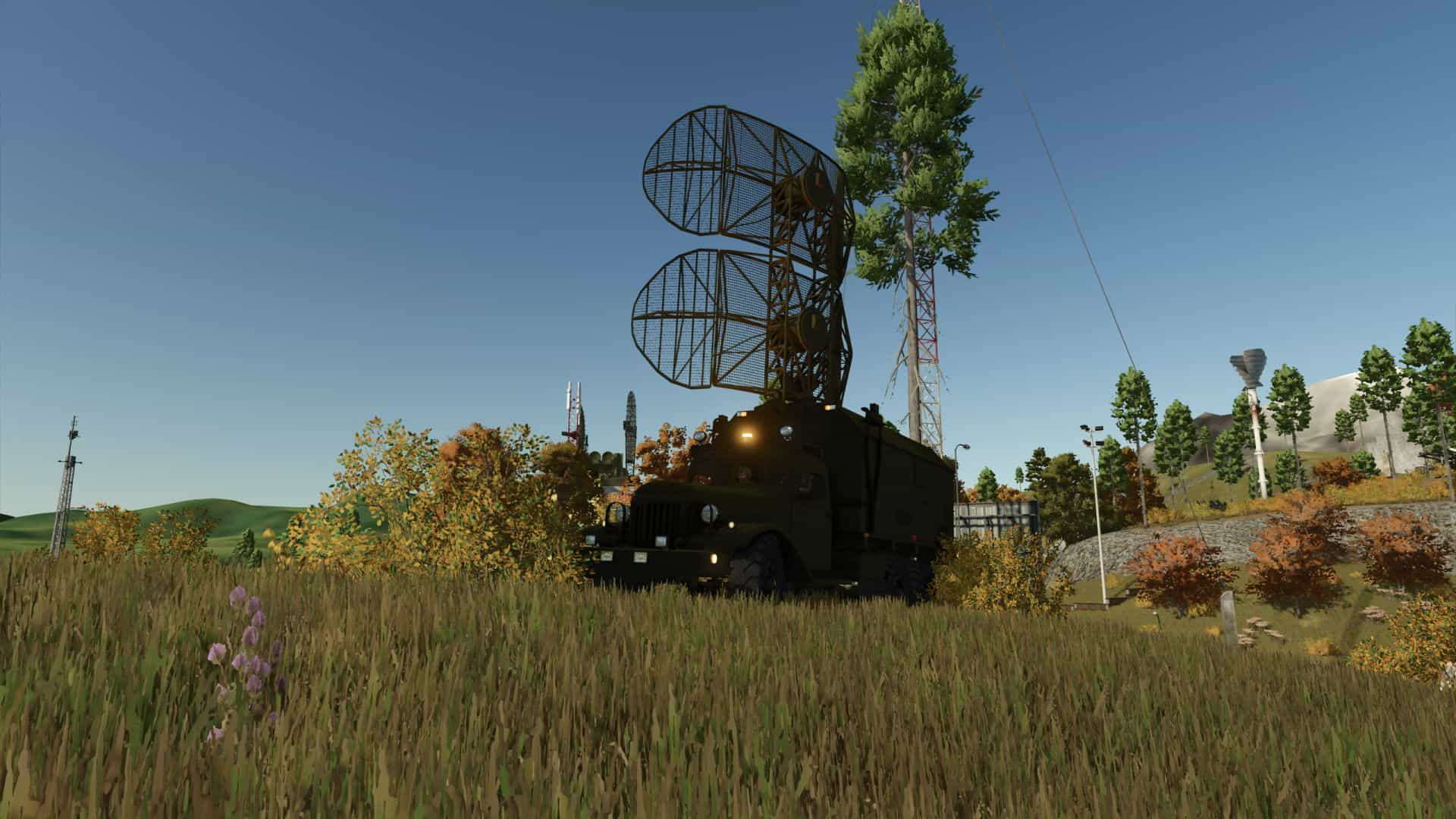
FS25 Zil 157 RADAR R15 v1.0
1952, SRI-244 began development of what would become the P-15 early warning radar. By 1955, the radar had passed state tests and was accepted into service with the anti-aircraft troops of the Soviet armed forces. The P-15 was designed to detect low-flying aircraft and was associated with the S-125 “Neva” (NATO name SA-3 “Goa”) anti-aircraft system, although it was later replaced by the P-15M2 “Squat Eye” radar, which mounted a single radar antenna on a 20-30 meter mast to improve coverage.
In 1959, the modernized P-15M wake radar underwent the state testing program, replacing the outdated mercury-based electronics. In 1962, another modernization of the P-15 underwent testing as the P-15N, being developed and produced by the Ulyanovsk Mechanical Plant. The P-15N introduced a more sensitive receiver, which improved detection range, and a new amplifier for the transmitter. Further improvements were made in 1970, when the P-15MN passed testing. The P-15MN included a coherent pulse Doppler filter (moving target indicator) to eliminate passive clutter (up to 50 dB), the first radar of its type in the Soviet Union. Finally, in 1974, modernization of the P-15 was so extensive that it resulted in a new designation, the P-19 “Danube”, also known as 1RL134.